
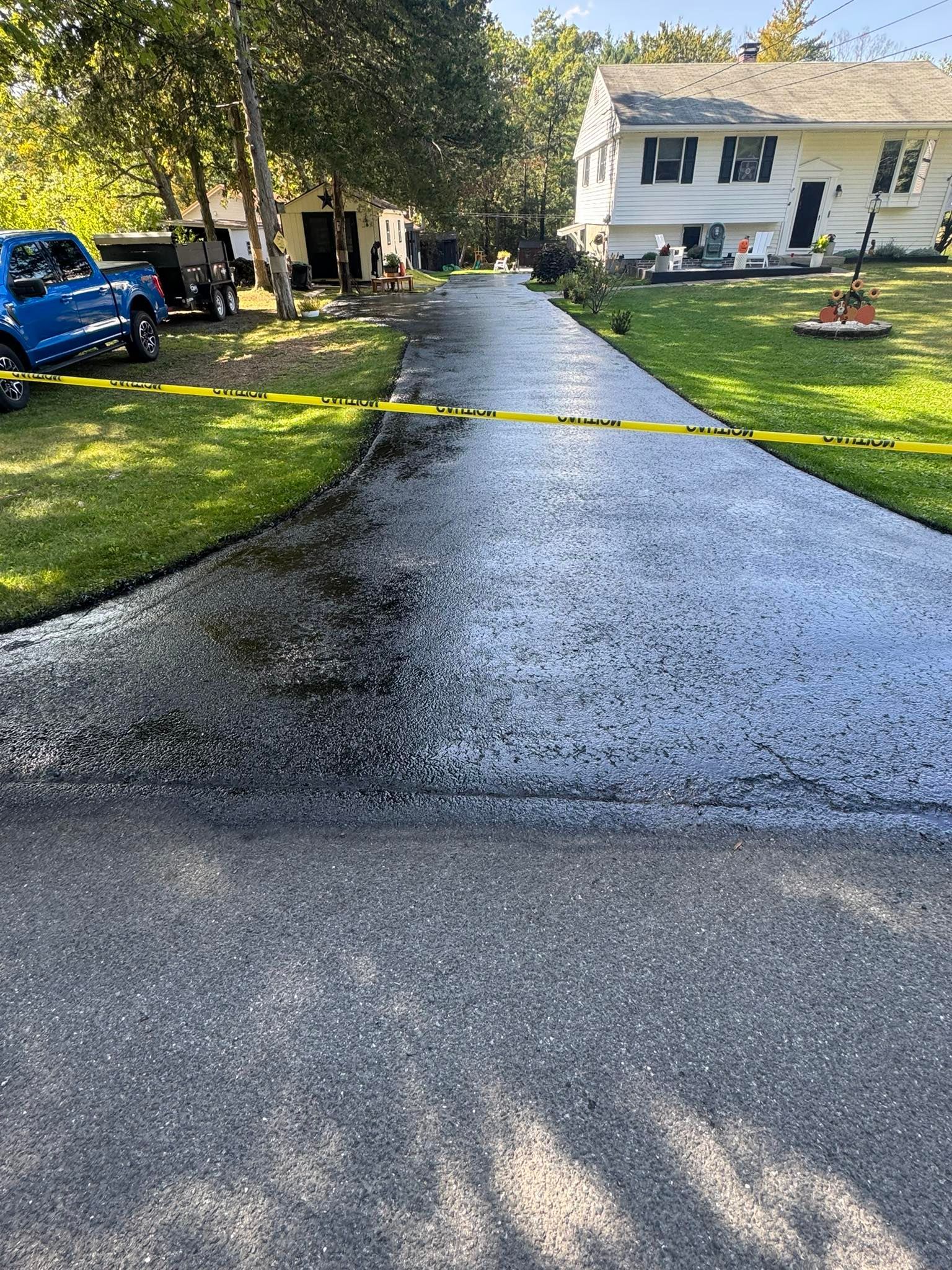
Groundwork That Prevents Sinking and Drainage Issues
Grading and Prep for Asphalt Driveways in Mayfield for properties with uneven terrain and water drainage concerns
The leveling and stone base preparation completed before asphalt installation determine whether your driveway remains stable or develops sinking spots and water pooling within the first few seasons. Proper grading establishes the slope that directs water away from structures and prevents the kind of saturation that destabilizes soil below the pavement, while compacted stone base distributes vehicle weight evenly across the ground. Tim's Paving & Sealcoating provides grading and site preparation services in Mayfield for residential driveways of various sizes and property layouts, handling both new installations and replacement projects where failed groundwork caused the original pavement to deteriorate.
The work begins with excavation to the required depth, followed by stone base spreading and compaction that creates stable support before any asphalt is applied. Drainage considerations during this phase account for property topography, building foundation proximity, and the natural water flow patterns that affect where runoff travels during heavy rain or snowmelt.
Arrange a driveway grading consultation to evaluate your property terrain and determine the base depth needed for stable pavement installation.
Why Strong Groundwork Matters Long-Term
Base preparation creates the stable foundation that prevents cracking caused by ground movement during freeze-thaw cycles common in Upstate New York, where soil expansion and contraction put stress on pavement above. A properly compacted stone base distributes weight and resists the settling that creates depressions where water collects, and grading ensures that surface runoff moves away from the driveway instead of pooling in low spots or running toward building foundations. Skipping these steps or rushing through compaction leads to the sinking, cracking, and edge failure that require full replacement within a few years.
After grading and prep work are complete, you see a level surface ready for asphalt application, with clearly defined edges where pavement will meet lawn or gravel areas and a slope that visibly directs water away from structures. The investment in proper groundwork extends the lifespan of the asphalt installed above it, preventing the premature deterioration that occurs when pavement sits on unstable or poorly drained base material.
Clean project sites and careful preparation before paving begins minimize disruption to surrounding landscaping and ensure the driveway installation progresses smoothly once asphalt work starts. The service addresses both new driveway construction and replacement scenarios where existing pavement must be removed before base repair can address the underlying problems.
Questions Before Starting Your Project
Homeowners planning driveway installations often ask about excavation depth, drainage planning, and the difference between proper base preparation and shortcuts that lead to early failure.
What depth of excavation is required for driveway grading?
Excavation depth depends on soil conditions and expected vehicle weight, with residential driveways typically requiring removal of several inches of topsoil followed by placement of compacted stone base before asphalt installation begins.
How does grading prevent water from pooling on the driveway?
Grading establishes a slope that directs water off the pavement surface and away from building foundations, preventing the standing water that seeps into cracks and causes freeze-thaw damage during Mayfield winters.
When should I replace the entire base rather than just repaving?
Full base replacement becomes necessary when ground below the original driveway has settled unevenly, when drainage was never properly established, or when frost heave damage has created voids and instability that surface repaving cannot correct.
Why do some driveways develop cracks along the edges first?
Edge cracking occurs when base material was not extended far enough beyond the pavement boundary or when compaction was inadequate near edges, leaving unsupported asphalt that breaks under vehicle weight and seasonal ground movement.
What type of stone is used for driveway base material?
Crushed stone aggregate in specific size gradations provides the compaction and drainage characteristics needed for stable base support, with larger stone at the bottom for drainage and finer material at the top for smooth grading before asphalt placement.
Tim's Paving & Sealcoating handles site preparation for new driveways and replacement projects throughout the surrounding region, with experience preparing properties of various sizes and terrain conditions. Request a site evaluation to review your property layout, drainage requirements, and base preparation approach specific to your driveway installation.