
Repairs That Stop Pavement Deterioration
Asphalt Repair and Crack Filling in Mayfield for surfaces damaged by freeze-thaw expansion and water intrusion
Seasonal freeze-thaw conditions in Upstate New York cause cracks to widen each winter as water seeps in, freezes, and expands the gap, turning hairline splits into structural problems within a few seasons. Asphalt repair and crack filling address this progression by sealing openings before water infiltrates the base layer below, where freeze damage creates the kind of instability that leads to pothole formation and edge collapse. Tim's Paving & Sealcoating provides repair solutions for cracked, damaged, and aging asphalt on residential driveways and commercial properties in Mayfield.
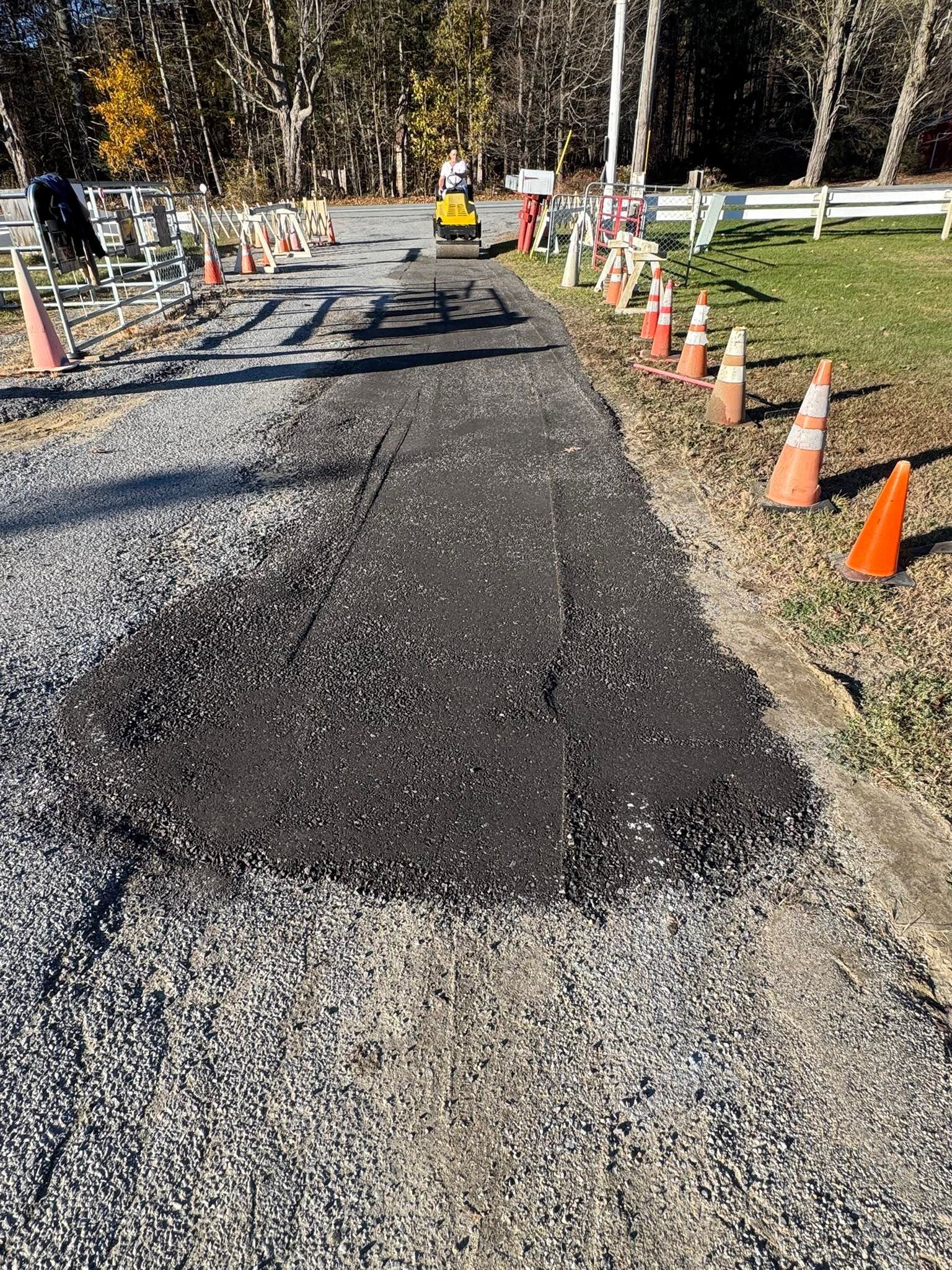
Crack filling involves cleaning debris from the opening, then applying rubberized sealant that flexes with temperature changes instead of hardening and splitting like untreated asphalt. Patching addresses larger damaged areas where the surface has already deteriorated, requiring removal of compromised material and replacement with compacted asphalt that bonds to the surrounding pavement.
Schedule an asphalt inspection to identify cracks and surface damage before water infiltration creates more extensive pavement problems.
What Changes After Cracks Are Sealed
Sealed cracks stop acting as entry points for water that would otherwise travel down to the base layer and freeze, preventing the expansion cycle that widens cracks and destabilizes the ground below. The sealant remains flexible through seasonal temperature swings, maintaining its bond to pavement edges instead of pulling away and reopening the gap. Patching restores surface integrity in areas where material has already crumbled or sunken, eliminating the uneven spots where water collects and accelerates further damage.
After repairs, you see a uniform surface without the spiderweb crack patterns that spread across driveways each spring, and patched sections that sit flush with surrounding pavement instead of forming depressions or raised edges. The work extends pavement lifespan by addressing damage before it progresses to the point where full replacement becomes the only viable option. Routine crack filling performed before each winter season prevents the kind of deterioration that turns minor maintenance into major reconstruction projects.
Honest recommendations based on actual pavement condition mean you receive repair solutions when they are effective and replacement guidance when damage has progressed beyond what patching can address. Both residential and commercial properties benefit from efficient work that minimizes downtime and restores surface appearance along with structural integrity.
Answers to Frequent Service Questions
Property owners evaluating repair options often ask about timing, material longevity, and the point at which repairs no longer make sense compared to full replacement.
What causes asphalt cracks to form in the first place?
Cracks develop from a combination of ground movement during freeze-thaw cycles, water infiltration that erodes base material, UV exposure that dries and hardens asphalt over time, and the natural contraction and expansion that occurs with seasonal temperature changes in Mayfield.
How does crack filling prevent larger pavement problems?
Filling cracks blocks water from reaching the stone base below, where freeze-thaw expansion creates voids and instability that lead to sinking, pothole formation, and the kind of structural failure that requires full pavement replacement.
When should I schedule crack filling work?
Crack filling should occur during dry weather before winter freeze cycles begin, giving sealant time to cure and bond properly before temperatures drop and moisture exposure increases.
Why do some patched areas sink or crack again shortly after repair?
Patches fail when the base below was not properly addressed, when patch material was not adequately compacted, or when surrounding pavement deterioration continues to create movement and stress around the repair area.
What determines whether repair or replacement makes more sense?
Replacement becomes the better option when crack density exceeds a certain threshold, when base material has deteriorated extensively, or when surface damage covers more area than intact pavement remaining on the driveway or lot.
Tim's Paving & Sealcoating provides repair and crack filling services for properties throughout the surrounding region, with attention to seasonal conditions that affect material performance and honest assessments of pavement condition. Arrange an evaluation to determine which repair approach addresses your specific damage patterns and prevents continued deterioration.